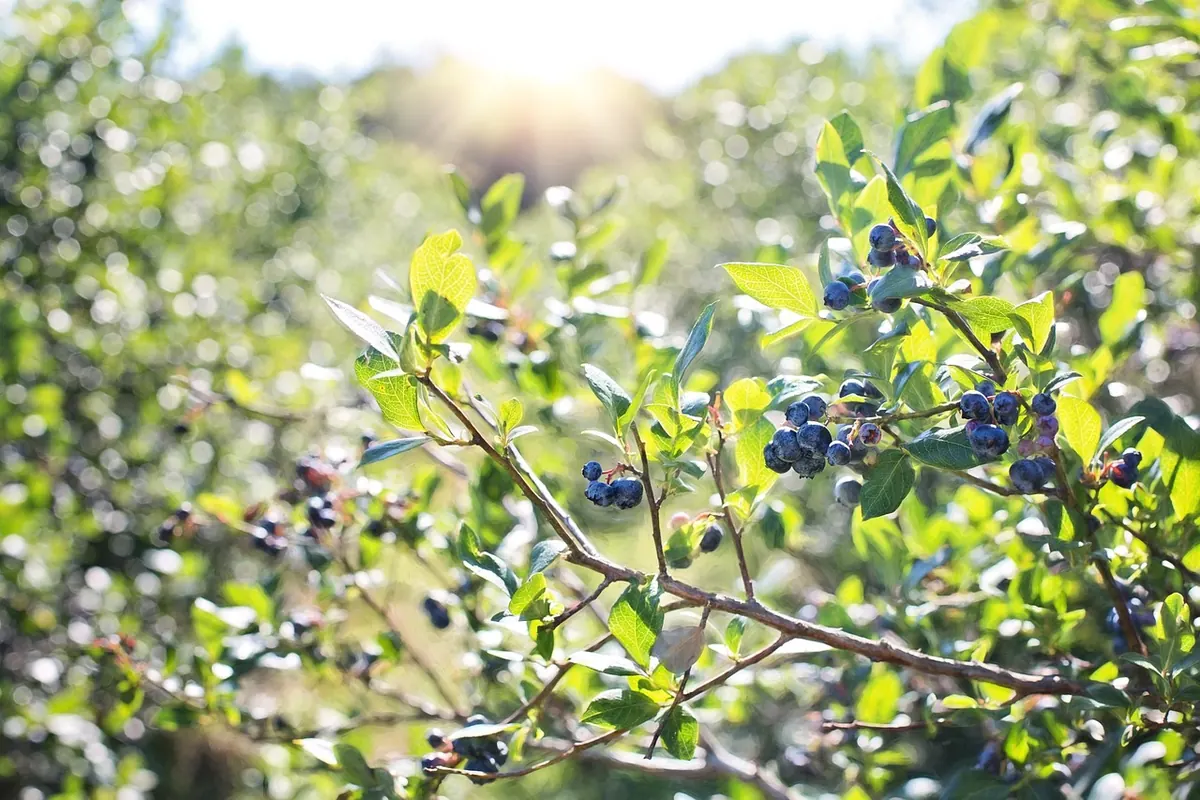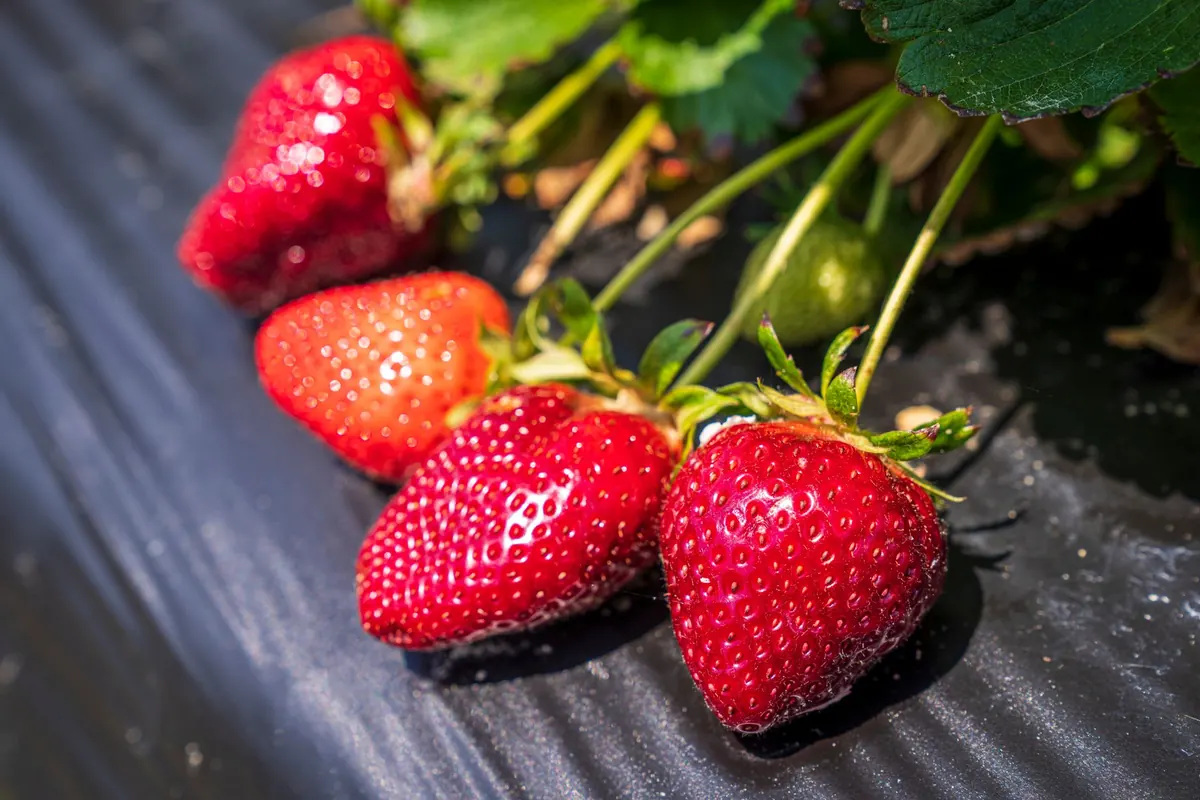
A blueberry bush with yellow leaves and green veins isn't short of fertilizer. It's short of iron it can actually reach, and the culprit is usually pH. Get that number right and the same plant, with the same feeding and watering, turns deep green and starts throwing fruit. Raspberries and blackberries are more forgiving, but they still pay you back for a little soil chemistry.
Soil pH measures how acidic or alkaline your ground is on a 0 to 14 scale, with 7 being neutral. It matters because pH controls which nutrients stay dissolved in soil water. Below about 6.5, iron, manganese and zinc are readily available to roots. Above that, they begin locking up in compounds plants can't absorb.
Blueberries are the extreme case. They evolved in sandy, acidic woodland soils and they feed on ammonium rather than nitrate. In soil that drifts toward neutral, they struggle to take up nitrogen and iron at all, which is why pale leaves with green veins are the classic sign of a blueberry in the wrong bed. Raspberries and blackberries are less fussy and will grow across a wider range, but alkaline soil still leaves them chlorotic and low-yielding.
There's a second reason to deal with pH first: it is far easier to shift a bed before you plant than around established roots. Blueberries live for decades in the same spot. Correct the soil a season ahead and you won't be fighting it forever.
A tidy sample is the difference between a useful number and a guess. Use a clean trowel or spade; a tool that has touched lime or fertilizer will skew the result.
Timing counts. Don't sample right after liming, sulfur-treating or fertilizing; wait at least a couple of months. Sample in fall or early spring, not in sloppy wet weather, so you have time to amend before planting.
Whatever you use, test twice if a result surprises you, and test your water source if you grow in containers.
If your reading comes back at 4.6 and you're planting raspberries, you're close enough. If it comes back at 6.8 and you want blueberries, you have real work ahead.
Elemental sulfur is the standard choice. Soil microbes convert it into sulfuric acid, which is why it works gradually: weeks in warm, moist soil, several months in cold. Apply it in fall for spring planting and work it into the top few inches.
A rough rule of thumb for sandy soil is about one pound of elemental sulfur per 100 square feet to drop pH by one full point. Clay holds far more buffering capacity and needs considerably more. Follow your test recommendation or the product label rather than guessing, and split a large change across two seasons. Big single doses can shock roots.
Ammonium sulfate fertilizer acidifies gradually as it feeds, which makes it a sensible choice for established bushes. Aluminum sulfate acts faster but adds aluminum to the soil, so use it sparingly. Ferrous sulfate gives a quick drop that doesn't last. Mixing peat moss or pine bark fines into a planting hole helps right around the roots, which is often enough for a single plant.
Pine needles and coffee grounds make fine mulch, but neither will move your pH in any meaningful way. Don't count on them as amendments.
Keep lime, wood ash and mushroom compost away from blueberry beds entirely.
If your native soil is naturally alkaline, common over limestone, stop fighting it. Blueberries grow beautifully in large containers or raised beds filled with a peat-based mix blended with pine bark fines. You control the pH completely, and re-acidifying a container each year is far easier than renovating a whole bed.