A strawberry bed is a shallow, thirsty tangle of roots, and raspberry canes hate standing water almost as much as they hate drying out. Overhead watering gets the leaves wet, feeds every leaf spot and fruit rot in the neighborhood, and wastes a good share of the water to evaporation before it ever reaches the soil. A drip line solves all of that at once. It runs along the row, drips slowly into the root zone, and leaves the foliage bone dry. You can build a patch-sized system with parts from any garden center or irrigation supplier, and once it is running, most of the work is remembering to check the filter.
Berry plants have two traits that make overhead watering a poor match. First, their roots sit near the surface, so they dry out quickly but also resent being soaked. Second, their fruit ripens low and slow, and wet berries split, mold, and rot. Keeping the canopy dry through the growing season removes a lot of that pressure without spraying anything.
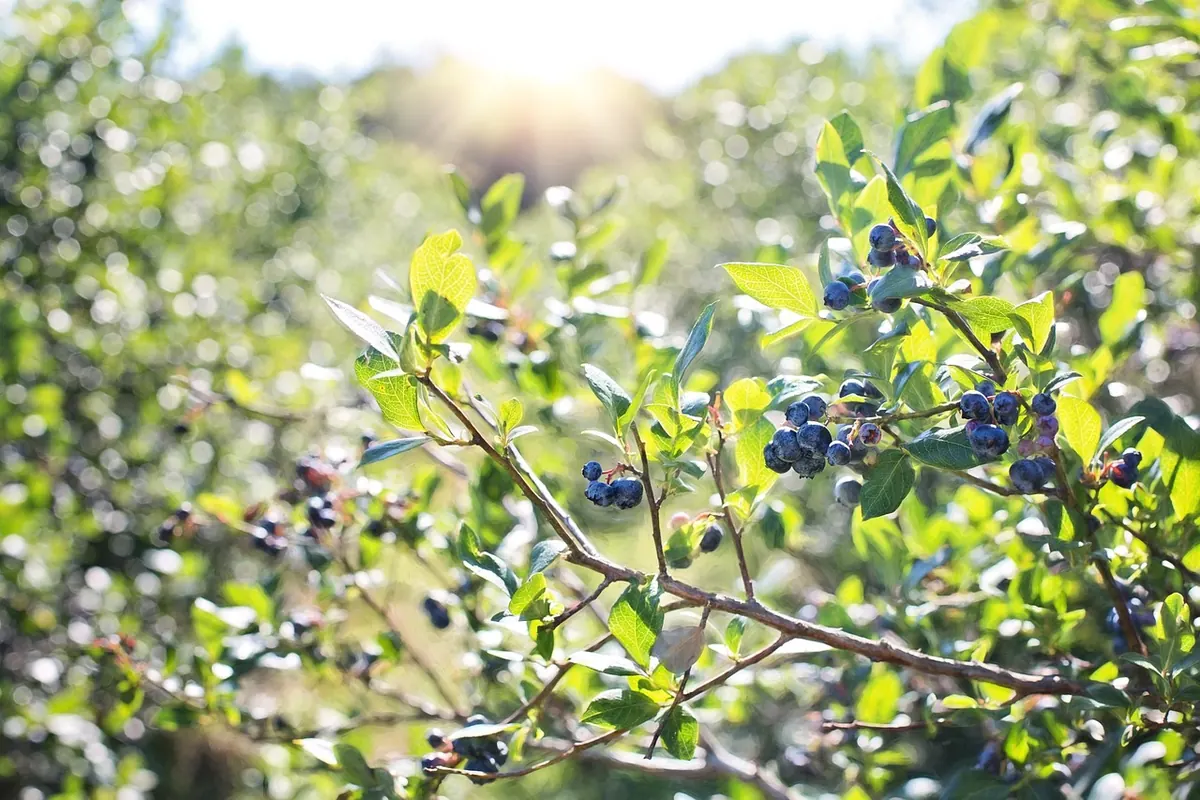
Drip also puts water where it is actually used. Instead of wetting a square meter of soil to reach one plant, you wet a band a foot wide directly under the row. That means fewer weeds germinating between rows, mulch that stays in place instead of floating off, and a patch you can water in the evening without worrying about leaf wetness overnight. Blueberries, with their fine, shallow, fibrous roots, respond especially well to steady, slow moisture rather than a weekly drench.
One honest caveat: drip is not a frost-protection tool, and it will not cool plants during a brutal heat wave the way an overhead sprinkler briefly can. For most home berry patches, that trade is worth making.
Everything here is standard hardware. Buy a little extra tubing; you will use it.
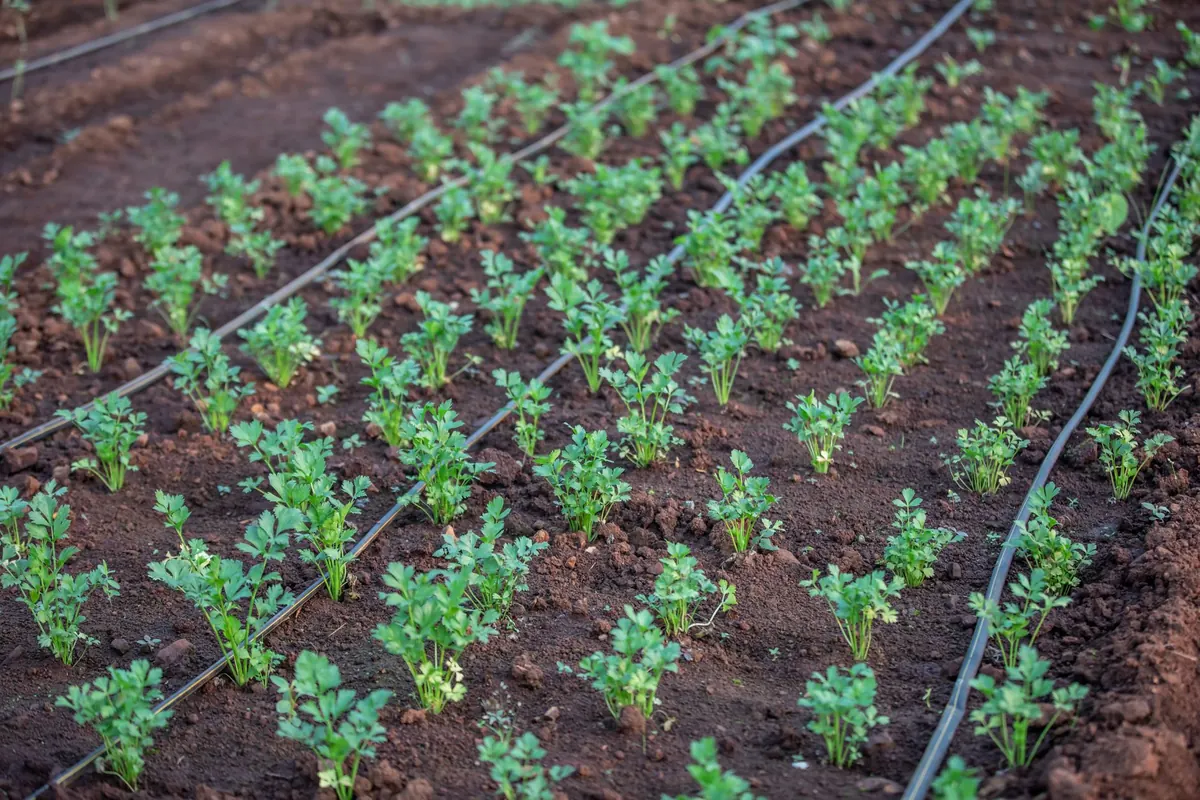
Walk the patch with a notepad. Note where the faucet is, how far the mainline has to run, and how your rows are arranged. Keep the mainline along one edge or down a central path, then branch into the rows. Long runs lose pressure, so if your patch is more than about 30 metres from the tap, consider splitting it into two zones rather than one very long line.
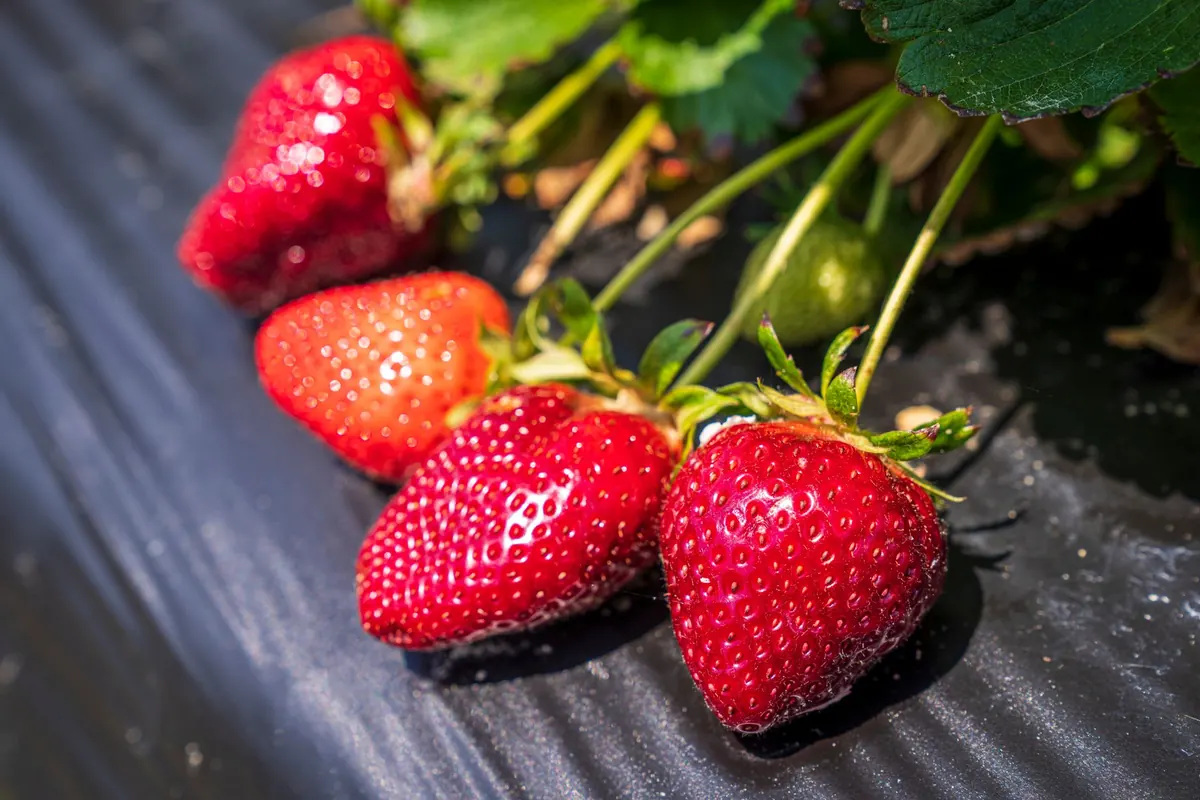
Strawberries in a matted row usually want emitters every 20 to 30 cm, or drip tape with emitters at that spacing laid right down the middle of the row. Raspberries and blackberries prefer a line offset slightly from the canes, so water lands on the root zone rather than the crown. Blueberries are best treated as individual plants: two to four emitters per bush, spread 20 to 30 cm from the trunk, or a loop of tubing around each plant.
Berries generally want roughly an inch of water a week, more in sandy soil, in containers, or during a hot, windy stretch. Rather than guessing, measure. Run the system for 30 minutes and dig a small hole with a trowel next to a plant. If the soil is damp 10 to 15 cm down, you are close. If only the surface is wet, lengthen the run time. If water is pooling, shorten it or switch to lower-flow emitters.
Run the system and walk the rows. Look for emitters that dribble weakly or not at all — that usually means debris in the line or a partially punched hole. Set a few straight-sided cans under emitters in different parts of the patch and compare how much they collect in 15 minutes. The first row and the last row should be reasonably close. If the far end is noticeably weaker, shorten the run or split the zone.
If you cannot lengthen run times without soaking one part of the patch, swap the emitters in the wetter area for lower-flow ones. Drip rewards this kind of small tuning far more than it rewards big redesigns.
Check the filter every few weeks and rinse it — a clogged filter is the single most common reason a drip system "stops working." Open the flush caps at the end of each zone once a month and let the water run hard for 30 seconds. Slug damage and rodent chewing are worth a look in autumn; a chewed mainline is easy to repair with a coupler and two clamps.
Mulch over the lines with straw or compost, but keep it a few centimetres clear of the emitters so you can see them. In cold-winter areas, drain the system before the first hard freeze: shut off the tap, open every flush cap, and let the lines empty. If you have a compressor, a short, gentle blow-out helps, but do not blast it — you will launch fittings across the yard.
The first summer after you install drip, the change is subtle: no wet leaves after watering, fewer weeds in the paths, berries that stay firmer because the fruit never gets rained on. By the second season, the whole thing feels less like equipment and more like a habit. Start with one zone this weekend — a single strawberry bed is a perfectly good place to learn — and expand once you see how the soil responds.
Photo: Anil Sharma / Pexels