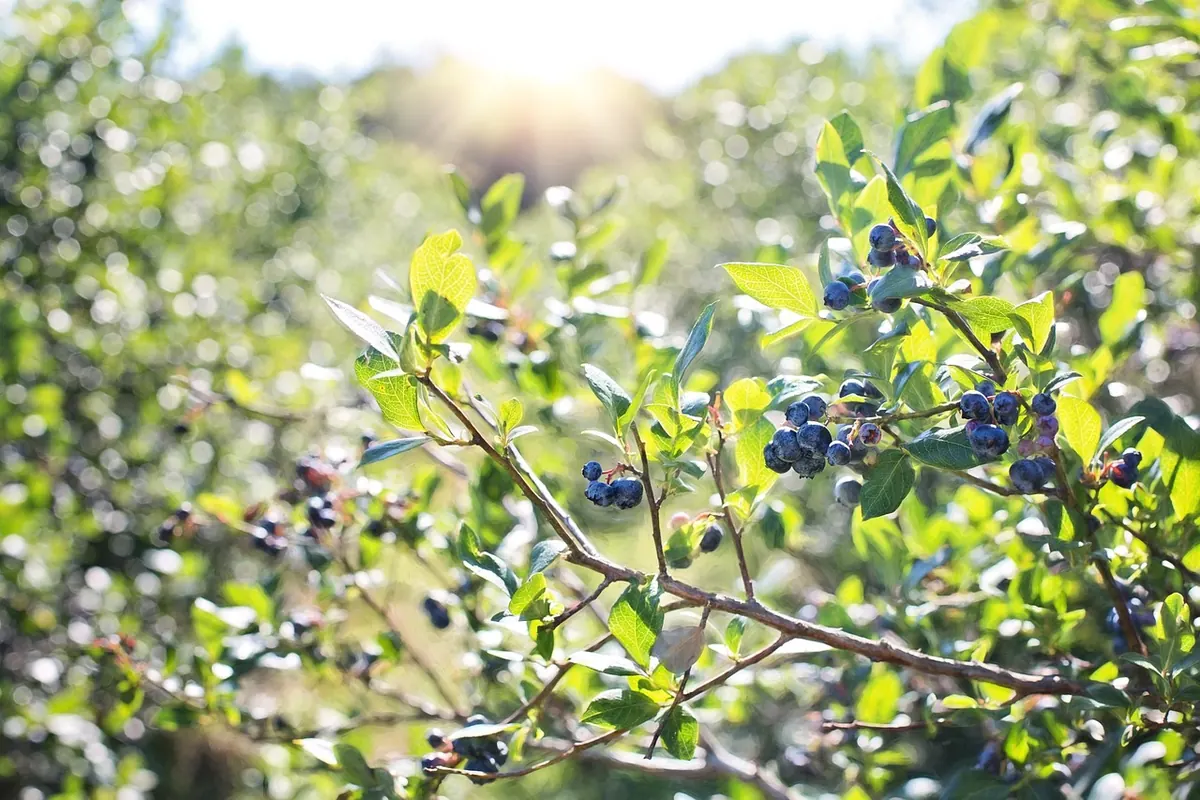
A berry patch is one of the best returns a small homestead offers: a few square metres of cane, bush, and runner that pays you back in bowls of fruit every summer. It is also the planting people most often get wrong. Berries are perennials, which means a hasty layout can lock you into the wrong spot, the wrong spacing, and a slow decline in yield for years. A little forward planning — thinking in ten-year blocks instead of one season — solves most of that.
Before choosing varieties, walk the property at three times of day and mark where sun actually lands. Most fruiting berries want six to eight hours of direct light, though currants and gooseberries will crop acceptably in half shade. Note the low corner where frost settles, the spot where water pools after rain, and how far you are willing to drag a hose or run a drip line.
Then take a soil test. This matters most for blueberries, which need genuinely acidic soil, generally in the range of pH 4.5 to 5.5, and will sulk for years in neutral ground. If your soil is sweet and limy, either commit to a dedicated acidified bed with plenty of organic matter or skip blueberries and put that space into brambles and currants that suit what you have.
Rotation on a small property is mostly about knowing how long each plant stays useful. That tells you where to put it and how much room to reserve for its replacement.
The practical rule: permanent, long-lived plants go to the edges and corners where you will not need to dig. Short-lived, rotating crops get the open, accessible middle ground.
Use the first year to improve ground rather than plant everything. Add compost, break up compacted layers, and set out a strawberry bed and your first row of raspberries. Keep the strawberry beds in blocks of three or four, and plant only one new block each year. Harvest is light at first; that is normal.
Brambles hit their stride, currants and gooseberries are cropping, and the strawberry blocks are in full rotation. This is the period when you will be glad you left walking room between rows — picking from a crowded patch is miserable work. Add blueberries now if you have prepared an acid bed, and start a small nursery area for propagation.
Oldest strawberry beds come out, new ones go in on ground that has grown something else for a season or two. The first raspberry row may be showing decline; take root suckers from your healthiest plants and start a replacement row before you remove the old one. Blueberries and currants need only pruning and mulch.
Strawberries are where a small homestead gains the most from planning. Reserve three or four beds of modest size. Each spring, plant one new bed; each summer after harvest, remove the oldest. That gives you a continuous supply without a boom-and-bust cycle, and it keeps the ground from carrying strawberry roots for more than three seasons.
After fruiting, cut or mow the foliage, thin the plants to roughly 15 to 20 centimetres apart, and top-dress with compost. Runners from June-bearing types can be pegged into pots in late summer to create next year's planting stock. Day-neutral varieties produce over a longer window but generally give smaller, less abundant flushes — useful for fresh eating, less so for preserving.
Raspberries and blackberries are the plants most likely to take over a small yard. Give them a permanent row with a simple two-wire trellis, and keep the row width to about 40 to 50 centimetres by digging out stray suckers each spring.
Choose between summer-fruiting (floricane) types, which fruit on last year's canes, and autumn-fruiting (primocane) types, which fruit on this year's growth and can simply be cut to the ground each winter. On a tight property, autumn types are often the easier bargain: less staking, less winter tying, and no complicated two-year pruning.
Rotations only work if the maintenance happens on time. Pin a simple schedule inside a shed door or in a notebook:
Write down what you planted, where, and how much you picked. Three seasons of notes will tell you more about your property than any general spacing chart. Keep plant tags in a folder alongside the map, note which varieties cropped well in wet years and dry ones, and mark the beds you plan to retire.
A ten-year layout is not a rigid blueprint. It is a schedule for replanting, a set of reserved spaces, and a habit of replacing plants before they stop earning their room. Plant the permanent things first, rotate the short-lived ones patiently, and the patch will keep feeding you long after the first cane has gone.
Photo: Mark Stebnicki / Pexels