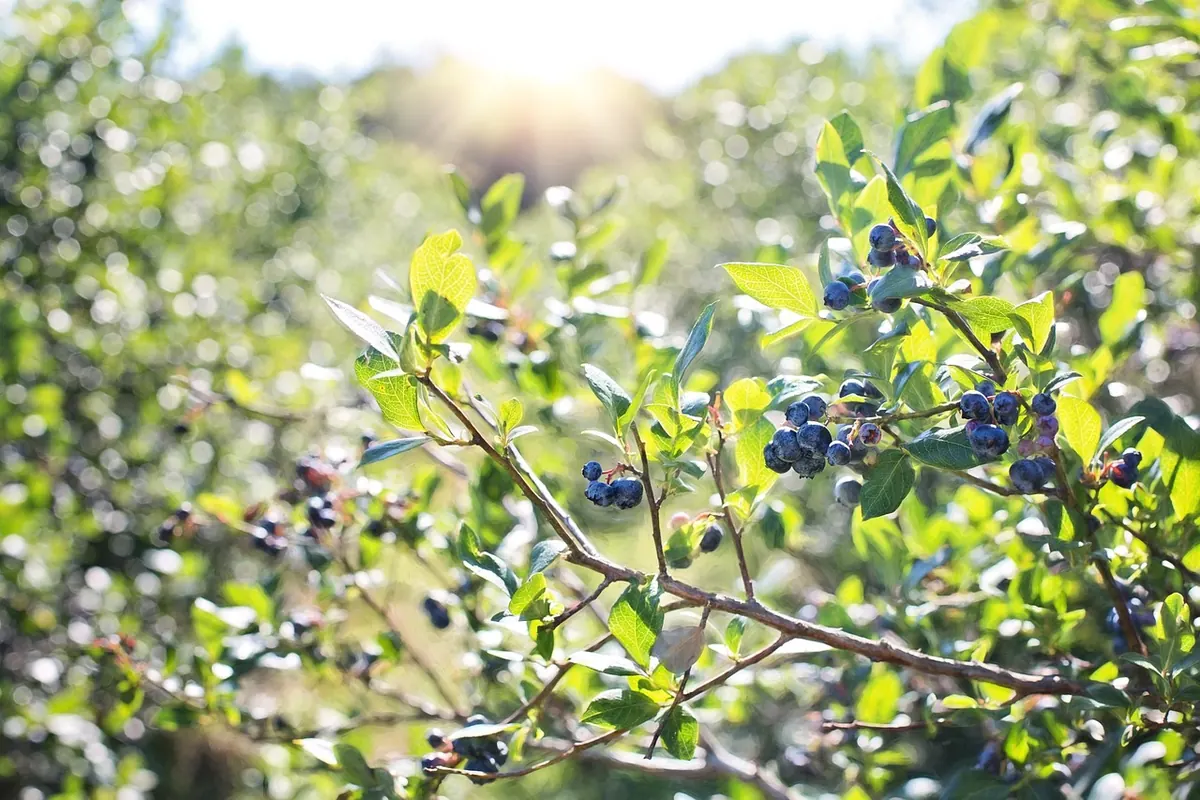
Blueberries have a reputation for being fussy, and clay soil is where that reputation gets earned. A bush planted into heavy, sticky ground can look fine through spring, then stall out, yellow between the veins, and die quietly the following year. Most of the time the plant didn't fail because of disease or bad luck. It failed because the soil underneath it never gave the roots a chance.
Clay isn't the enemy. It holds water and nutrients better than sand, and plenty of gardens grow well in it. Blueberries just happen to be one of the few plants whose roots are built for loose, acidic, well-drained ground. Here are the mistakes that show up again and again, and what to do instead.
The single most common mistake is digging a hole in clay, dropping in a nursery pot of blueberries, and backfilling with the same clay. The plant survives the first season on the energy it had in the pot. Then the roots try to spread, find a dense, airless wall, and stop.
Blueberry roots are fine and fibrous, with almost no ability to push through compacted soil. They grow in the top 12 to 18 inches where organic matter, air, and moisture overlap. You have to build that zone before the plant goes in, not after. A generous mix of pine bark fines and peat moss worked into a wide area — two to three feet across per plant, not just the width of the root ball — gives roots somewhere to go.
Picture a hole dug into clay, filled with light, fluffy potting mix. Water soaks in happily. Then it hits the clay bottom and sides and sits there, because the surrounding soil drains far more slowly than the amended fill. The roots spend the winter in a bucket.
If water in your area ponds for hours after rain, or if a test hole holds water overnight, don't fight it — plant above it. A raised bed or a mound of amended soil 12 to 18 inches tall, sitting on top of the clay rather than sunk into it, solves drainage in a way no amendment can. The mound should be wide, not a narrow cone, so roots aren't baked at the edges.
One detail that trips people up: never put gravel or stones in the bottom of a planting hole to improve drainage. It doesn't drain. It creates a perched water table right above the gravel, and roots rot just as fast.
Blueberries need soil in the range of roughly 4.5 to 5.5. Clay tends to sit neutral or alkaline, and it also buffers hard against change, meaning a quick sprinkle of sulfur barely moves the needle. Iron becomes unavailable at higher pH, which is why leaves turn pale yellow with green veins while the bush slowly starves.
Test before planting. If you're adjusting with elemental sulfur, apply it months ahead, work it into the top few inches, and retest — it needs soil biology and time to convert. Don't guess at the rate; follow the label based on your measured pH and soil texture. A cheap pH meter is better than nothing, but a lab soil test is worth the small cost when you're preparing a permanent bed.
Good intentions can wreck a blueberry bed. These are the ones to keep out of the planting mix:
What works: pine bark fines, peat moss, composted pine needles, and a coarse, chunky texture overall. Think forest floor, not flower bed.
In heavy soil, it's tempting to sink the root ball a little lower to keep it moist. Resist that. Set container-grown blueberries so the top of the root ball sits level with the surrounding soil, or an inch above in clay. The crown — where stems meet roots — should never be buried under a layer of mud.
If the roots are circling in the pot, tease them out with your fingers or make a few vertical cuts around the root ball before planting. A circling root system in clay barely expands at all.
Mulch does three jobs in a clay bed: it keeps the surface from crusting, holds moisture steady, and slowly feeds acidity as pine bark breaks down. Use three to four inches of pine bark or pine straw, spread wide enough to cover the whole root zone plus a foot.
Just keep it off the stems. A cone of mulch packed against the crown holds moisture where you don't want it and invites rot. Pull it back a couple of inches and leave a small well.
Clay behaves strangely. It can be saturated in March, cracked and bone-dry in August, and soggy three inches down while the surface looks fine. Watering every Tuesday because that's the schedule is how blueberries drown and dry out in the same season.
Check instead. Push a trowel into the soil near the drip line and feel it at two and six inches. Water deeply when the top few inches are starting to dry, aiming for about an inch to an inch and a half per week including rain. Young plants in their first year need the most attention. Established bushes in clay often need less than you'd think, but they still need to be checked, especially through a dry spell.
Get those seven things right and clay stops being a problem. The bushes settle in, the leaves stay a deep healthy green, and you get berries instead of a slow-motion funeral. If your soil is unusually heavy or drainage is genuinely poor, a local extension office or a nearby nursery that knows your area's soil can give you more specific guidance.
Photo: Pexels / Pixabay